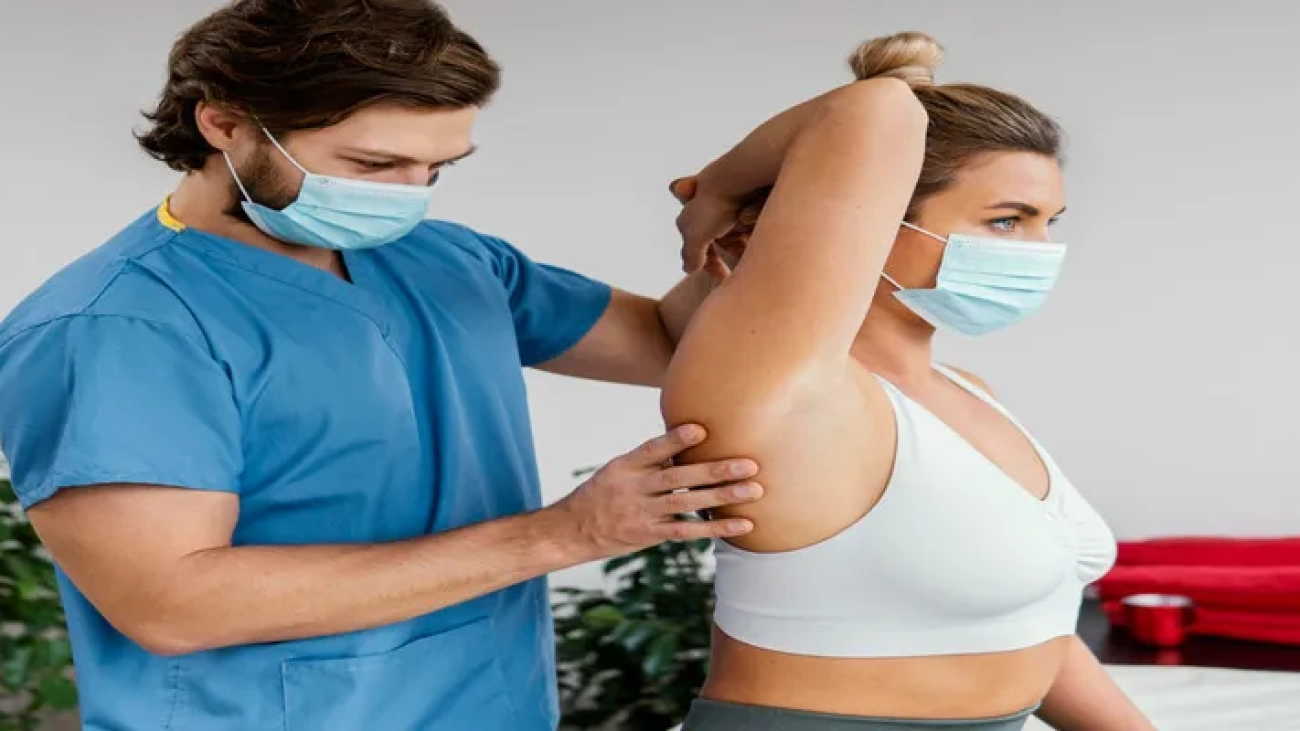
People often picture lifting heavy weights or enhancing their athletic performance while thinking about strength training. In reality, the purpose of this training extends beyond the gym. During rehabilitation, strength training becomes one of the most effective ways to restore movement, improve joint stability, and reduce the risk of recurring injuries. This is especially true in the case of the shoulder, one of the complex and mobile joints of the human body. There is no doubt that treatment relieves discomfort, but long-term recovery is always dependent on rebuilding the muscles that help the shoulder be stable while performing everyday movements. Hence, understanding the role of strength training is the most important way to prevent the same issue from recurring for all those who seek the right solutions for shoulder pain in Droitwich.
Why Strength Training Is Essential for Long-Term Recovery
The incredible flexibility of the shoulder means it relies heavily on surrounding muscles for proper support. Post-injury, muscles often become weaker than before. Even after treating discomfort, it can’t be ensured that the muscles responsible for stabilising the joint have regained their coordination and strength. This condition leaves the shoulder muscles vulnerable to future injuries during everyday activities.
Strength training addresses this issue by properly rebuilding the support system that surrounds the joint. As the shoulder recovers from injury, this training helps in preparation to meet the daily demands through seamless and stable movement.
Understanding the Importance of Stabilising Muscles for the Shoulder
Stabilising muscles like rotator cuff muscles work quietly in the background to keep the joint properly aligned as the shoulder moves in different directions, unlike the larger muscles that are responsible for generating powerful movements.
These muscles make countless adjustments to keep movement controlled and smooth every time one reaches for a shelf, lifts a shopping bag, or carries out everyday tasks. When the stabilising muscles become weak, the shoulder has to work harder to perform even the simplest movements. As other muscles try to compensate, uneven movement patterns develop, placing additional stress on the joint over time. This is one of the common reasons many people experience persistent shoulder pain, especially when underlying muscle weakness goes unaddressed.
Strength training specifically targets these stabilising muscles to support long-term recovery and improve overall shoulder function. Strengthening these muscles enhances the shoulder’s ability to cope with daily demands while reducing unnecessary stress on vulnerable structures. Whether recovering from an injury or managing ongoing shoulder pain, improving shoulder stability can help restore comfortable, pain-free movement and reduce the risk of future problems.
Strength Training Is About Control, Not Just Power
The biggest myth about rehabilitation is that strength training is all about building bigger or stronger muscles. In reality, proper shoulder rehabilitation is as much about strength as it is about control.
Modern therapeutic exercises have been particularly designed to improve the way the shoulder moves so that different muscle groups work together efficiently. This is the reason why the training starts with gentle and controlled movements before it progresses into more challenging exercises when the stability improves.
The ultimate goal here is not to lift the heaviest weight possible but to build a shoulder that can move efficiently, confidently, and without requiring any unnecessary compensation.
Stronger Stabilising Muscles Prevent Future Injuries
The biggest benefit of strength training is that its effects continue after the initial pain has settled. Strong rotator cuff muscles keep the shoulder properly positioned through every movement, and this improved control ends up reducing excessive movement within the joint. As a result, the strain on tendons, soft tissues, and ligaments is lowered significantly.
Individuals find everyday activities easier to perform whether they are working at a desk or participating in sport. As stability is built with targeted strengthening, it improves the current symptoms while reducing the risk of the same injury from returning in the future.
Weak Rotator Cuff Muscles Slow Complete Recovery
Recovery is not about eliminating pain but about restoring the natural ability of the shoulder without limitations. If stabilising muscles remain weak through the recovery process, the shoulder may appear to have recovered, but it lacks the level of support needed to adequately sustain movement. Such a situation leaves individuals hesitant when they think about returning to work, engaging in recreational activities, or exercising. Strengthening these key muscles is a prerequisite to complete recovery, as it restores confidence in the joint and enables it to function normally under varying demands. Hence, strength training not only supports recovery but also ensures that recovery is complete.
Strength Training Helps Shoulder Adapt to Increasing Demands
The joint does not automatically become ready for all the physical activity after recovery. As daily demands increase, the shoulder needs to be able to handle progressively greater loads. By strengthening the rotator cuff muscles, the joint gets the ability to adapt properly to the increasing demands and also improves its capacity to cope with more stress while avoiding overload. Such a gradual adaptation is often overlooked but is highly crucial for preventing future injuries, as it does not leave the shoulder vulnerable during varying mechanical demands.
Strong Stabilising Muscles Restore the Natural Movement of the Shoulder
After an injury, the body naturally alters the way it moves, and the same holds for the shoulder. This is a natural response of the shoulders to avoid pain. Rotator cuff muscles help ensure natural movement, which is why strengthening them promotes the same. With every bit of strength that these muscles gain, the movement becomes more balanced and coordinated. Balanced movement helps individuals get through daily activities without causing any unnecessary strain. Restoration of natural movement is achieved by strong stabilising muscles, which work effectively in reducing the likelihood of injuries in the long term.
Final Words
Strength training for stabilising muscles is about much more than simply rebuilding muscle mass. It is a vital part of restoring healthy shoulder function. As these muscles become stronger, they provide better joint support, improve movement control, enhance stability, and reduce the risk of recurring injuries. For individuals experiencing shoulder pain in Droitwich, targeted strengthening of the shoulder stabilisers can address the underlying causes of pain rather than just relieving the symptoms. At Energize Therapy, we personalise rehabilitation programmes focusing on rebuilding these essential muscles to improve mobility, eliminate discomfort, and promote long-term shoulder health and injury prevention.